| |
| After the removal of the plates from the hanger, the plates are dipped in chemicals; usage of the chemical and the Ph depends upon the M.O.C.of the plate and the nature of fluid its been used for to remove 100 % Scaling. |
 |
|
| |
 |
After chemical cleaning of the plates, anti corrosive chemical is applied to protect it from corrosion. |
|
| |
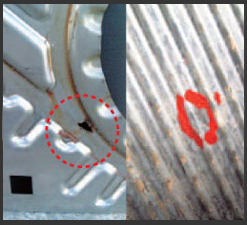
After carrying out the Light box testing of the plates, the whole area of the plate is tested with Dye-Penetrating method to find out about the crevices and fissure. |
 |
|
| |
 |
The Pinhole or the fissure is reclaimed by T.I.G. welding method with Argon support with the parent metal filler wire. |
|
| |
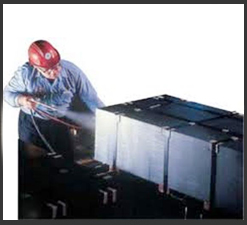
The thin down plates are metal blasted to prepare the substrate in well- guarded room and with
protection as to make the plates ready for metal coating to increase the thickness of the plate
so that the life of the plate increase and the cost goes down. |
 |
|
| |
 |
First the plates are thoroughly cleaned so as to remove any moisture and greasing element from the plates, then the Gasket cement is applied on the plates and the gasket is then pasted onto the plate one by one making a stack of 25-30 nos. of plates then weight is applied on it and kept in the oven for 8-10 hours to remove any kind of air trapping between the gasket and the plates, if not hot cured then there is every possibility of air being trapped inside and making a blow type situation and chances of leakages is 100 %.
|
|
| |
The Frame and the Pressure plate are machined as to remove the pitting and then a sheet of S.S.
having the thickness of 2-3 mm is mounted on the Frame and the Pressure plate so as to increase the
corrosion resistance capacity. |
 |
| |
 |
The plates are arranged according to the numbering done earlier one by one and tightened to it’s pack length found out from the formula.
|
|
|
| |